
Scott County Court Record Requests
The Clerk of the District Court, Scott County, holds the district case file. Aim your request there. Gather the case number, the document name, and a filing or event date. Have the copy type ready before you call. The Kansas District Court Public Access Portal often supplies enough basic case information to pin down the file. It certifies nothing, though.
There are several practical fallbacks. You can go to the clerk counter or the public terminal. You can also phone the office, or mail or fax a written request. A formal Kansas Open Records Act request to the judicial records custodian is another option. The statewide form even lets you list email as your preferred delivery method. The local policy publishes no dedicated records email address, though.
- Identify the Scott County District Court case and exact document.
- Check the public portal for allowed case information.
- Choose the counter, terminal, phone, writing, mail, fax, or KORA route.
- Ask about current copy, certification, payment, and return-mail terms.
- Receive the ordinary or certified copy through the agreed channel.
Scott County Court Record Access
The Scott County clerk policy walks through the counter, the terminal, and copying. Terminal visitors sign a sheet. Non-staff users do not get automatic access behind the counter, so clerk staff either supervise the session or handle the request themselves. Phone, in-person, written, and fax requests all receive a response within three business days under that policy.
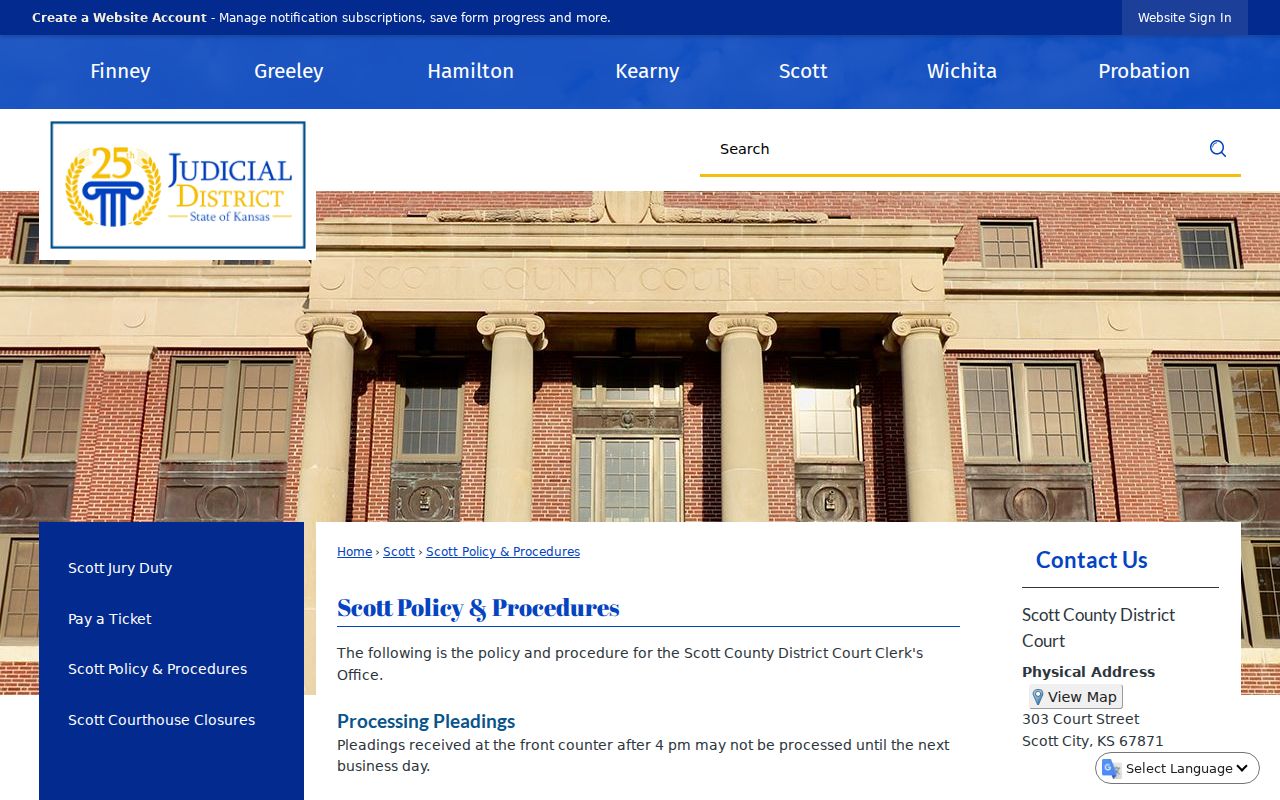
Which phone number works? The district's own pages list two. The local policy gives 620-872-7208. The staff listing gives 620-260-2552. Confirm the live line before treating either as the records desk. The fax is 620-872-3683, and the office sits at 303 Court Street in Scott City.
Kinds of Court Records
A Scott County court record comes in layers. Basic case information identifies the case. The register of action lists dates with brief event notes, and the filed document holds the actual text the court received or issued. Each layer answers a different question, so know which one your docket search is really after.
- Petitions, complaints, answers, and motions
- Orders, journal entries, judgments, and dispositions
- Public criminal, civil, probate, and traffic case material
- Registers of action and hearing-setting entries
- Transcripts or electronic records ordered through the court-reporter process
Some matters stay closed. Family, juvenile, protection-order, adoption, care-and-treatment, sealed, and expunged cases may be restricted in whole or part. A case category showing up in a portal filter is no promise that its documents are open.
Three Scott County Record Layers
Kansas Supreme Court Rule 106B defines the register of action. It means dated case activity with short descriptions. The register leaves out nonpublic information. It also does not capture every fact that matters to the case. A note that a motion was filed is just a note, not the motion itself. Likewise, a brief event entry is neither a transcript nor a signed journal entry.
Case information Case number, type, parties, attorneys, judge, hearing dates, and status when public.
Register of action A dated sequence of short event descriptions, also called the events index.
Filed document The pleading, order, judgment, exhibit, transcript, or other maintained court item.
A browser printout can carry the case number to the clerk's counter. It is not a certified judgment just because the official portal produced it.
Court Records: What They Contain
What a record contains depends on the case type and the access rules that govern it. The fields described here come from record categories that Kansas rules and official access material define. They describe what the court maintains, not any single result screen.
| Case Number | A modern Scott number may follow SC-2022-CR-000001; older files may omit the county prefix. |
|---|---|
| Case Header | Court, case type, filing date, status, and assigned officer when public. |
| Participants | Public party roles and attorney names, subject to access limits. |
| Events Index | Dates with brief descriptions of filings, hearings, service, and orders. |
| Documents | Allowed pleadings, orders, judgments, and attachments available by portal, terminal, or request. |
The register of action is a handy map. It supplies the event date or document name that a precise Scott County copy request needs.
Scott County Court Record Form
For a written request, use the Kansas court-records KORA form. Write Scott County District Court on the county line. The form wants your name and contact details, plus a preferred delivery method (email, mail, pickup, or fax). Add a specific description of the record, your signature and date, and the noncommercial-use certification the form requires.
Be precise. Give the case number, record type, date range, and exact document. The custodian fills in the estimated reproduction cost. The form itself sets no flat fee or universal deadline. Scott County's local policy supplies the three-business-day response statement and the ordinary copy amount. A broad request costs more and eats staff time. A narrow description helps the custodian find the right item fast.
Copy Fees and Certification
A plain copy just reproduces the document. Certification is different: the clerk formally attests that the copy is true. No official source lists one universal fee for certified copies, exemplifications, docket certification, or searches, so ask the Scott County clerk for the current general certification price. One more caution applies here. That attorney-only rule does not extend to every requester.
| Item | Published Amount or Rule |
|---|---|
| Ordinary clerk copy | $0.25 per copy/page wording in local policy |
| First certified copy for attorney of record | No charge |
| Additional same-document certified copy for attorney of record | $1 |
| General certification or exemplification | Ask the clerk; no official amount located |
| KORA reproduction | Estimate supplied by records custodian |
Scott County District Court Clerk
303 Court Street
Scott City, KS 67871
620-872-7208 or 620-260-2552
Fax: 620-872-3683
Want the copies mailed back? Ask first whether advance payment is required. The published postage-paid envelope rule covers attorneys requesting returned file-stamped or certified copies.
Scott County Record Terminal Access
Some Scott County court records never reach the web portal. Kansas guidance notes that older documents, converted from systems used before Odyssey, may sit only on the courthouse terminal. That gap is not a seal. A failed human check is one reason a document stays off an online docket search. A web exclusion is another. A sealing order is a third. These are three separate reasons.
A public item missing online? Bring the case number to the Scott County clerk. Ask whether the terminal holds it or whether a copy request works. Sealed and other nonpublic records stay closed either way. And note the difference: a terminal result is not a clerk-certified copy.
Access Rules for Court Records
Public access to a Kansas court docket comes from several layers of law. Judicial rules, the Kansas Open Records Act, confidentiality statutes, and orders issued in a case all shape it. Each plays a part. Rule 22 sets the terms for using the public portal and courthouse terminals. Fees are covered too: K.S.A. 45-219 lets the clerk charge reasonable amounts for inspection and copies. Not everything is open, though. K.S.A. 45-221 lists the exceptions and allows protected details to be redacted. For sealing a civil court record, K.S.A. 60-2617 offers a process built on good cause and the public interest.
Web absence is not proof of sealing. Check the case number and type, then ask whether the item is terminal-only, an older converted document, restricted by rule, or subject to a sealing order.
Juvenile files sit behind extra limits under K.S.A. 38-2309, so a Scott County court docket covering a minor is rarely open to the public. Rule 106B keeps sensitive identifiers off electronic access too. Clerk staff will walk you through the request route that does exist, but they cannot hand over anything the law or a court order bars.
Scott County Records and E-filing
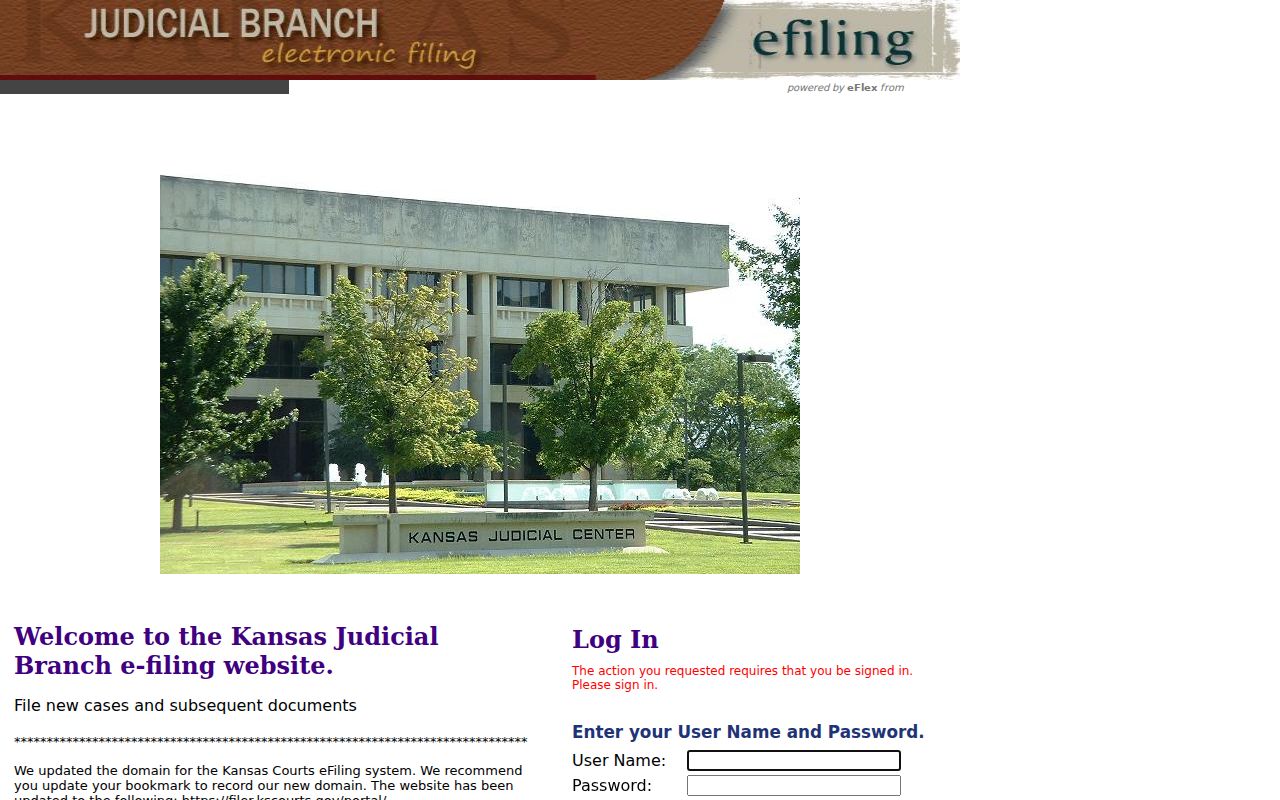
Authorized filers can open a new Scott County case or add later documents through Kansas Judicial Branch eFiling. Note what the landing screen shows: filing functions only, not a public record search.
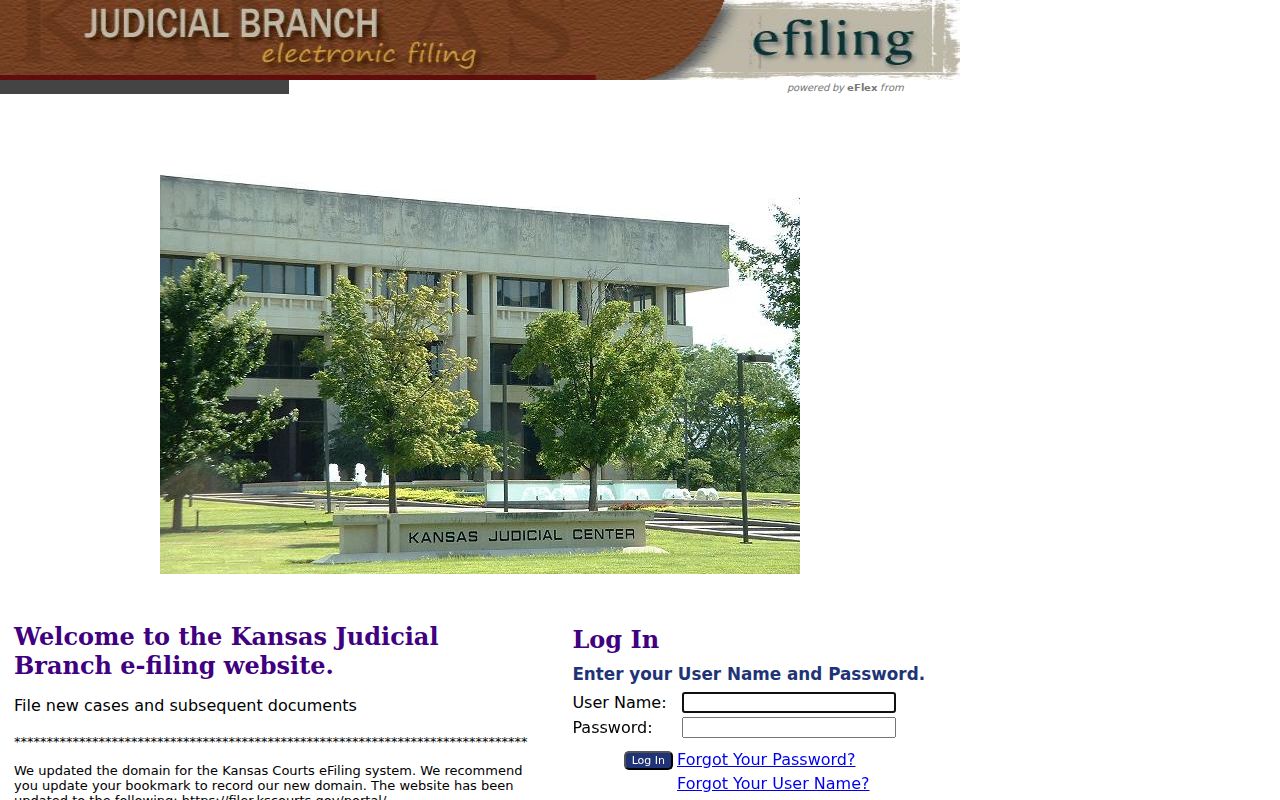
The eFiling worklist draws the line plainly, greeting you with user-name, password, recovery, and new-user controls rather than any case lookup.
Three ways exist to pull Scott County court records. The public can use Kansas Case Search, the terminal at the Scott County courthouse, or a request to the clerk of the district court. If a case number is still unknown, the county's docket search routes will help pin it down first.